Your chair might be ergonomic.
Your desk might be at the correct height.
You might even have one of those expensive standing desks.
But by the end of the working day, your shoulders are still creeping towards your ears, your neck feels difficult to turn, your hips feel tight and your knees take a moment to straighten when you stand up.
Sound familiar?
For many Melbourne office workers, stiffness slowly becomes part of the normal nine-to-five routine. It may begin as a tight shoulder after a long meeting or a stiff lower back when getting out of the car.
Then it starts happening more often.
The problem is not necessarily that you have chosen the wrong chair. A well-designed workstation can improve your comfort, but no chair can replace regular movement.
Your body is designed to change position, bend, reach, rotate and walk. Even a comfortable position can begin to feel uncomfortable when you remain in it for too long.
That is where regular movement and stretching become important.
Why does desk work leave your body feeling stiff?
Desk work usually keeps your body within a very limited range of motion.
Your hips remain bent. Your knees stay in one position. Your arms sit in front of you. Your shoulders may gradually round forward, and your head may move closer to the screen as you concentrate.
None of these positions are automatically bad.
The issue is staying in one position for too long without giving your body enough movement variety.
Over time, you may notice:
- Tightness through the front of your hips
- Tension around your neck and upper shoulders
- Difficulty rotating your upper body
- Stiffness when straightening your knees
- A heavy or restricted feeling through your lower back
- Reduced comfort when reaching overhead
- One side feeling tighter than the other
- A need to constantly roll or crack your neck and shoulders
These sensations are your cue to change position and move, not necessarily proof that something is damaged.
Why an ergonomic chair is not the complete answer
A supportive chair can absolutely make desk work more comfortable.
It can help position your screen, arms, back and legs more appropriately. It may also reduce unnecessary strain while you are working.
But it cannot move your body for you.
There is no single posture that you need to hold perfectly for eight hours. In fact, constantly trying to sit in one rigid “correct” position can become uncomfortable too.
A more practical goal is to create movement throughout the day.
That might mean:
- Standing up between meetings
- Walking while taking a phone call
- Changing your sitting position
- Using a standing desk for part of the day
- Taking a brief movement break
- Stretching areas that feel restricted
- Reaching, rotating and bending in different directions
The best posture is often your next posture.
Your chair supports you while you work. Movement helps your body continue doing everything it needs to do outside work.
Why is stretching important for office workers?
Stretching gives your body an opportunity to move outside the limited positions used at a desk.
Done comfortably and consistently, stretching can help you explore and maintain your available range of motion. It can also make you more aware of differences between the left and right sides of your body.
Stretching is not about forcing yourself to touch your toes.
It is not a competition, and it does not need to hurt to be effective.
Useful stretching is about:
- Moving joints through comfortable ranges
- Reducing the sense of restriction after sitting
- Becoming more aware of how your body moves
- Preparing for exercise or activity
- Supporting flexibility over time
- Giving frequently used positions a break
- Reconnecting breathing with movement
Stretching is also only one part of healthy movement.
Walking, strength training, balance work, general exercise and regularly breaking up sitting all matter. You do not need to choose between stretching and strengthening. Most bodies benefit from both.
What are the different types of stretches?
Not every stretch needs to be performed in the same way.
The right type depends on whether you are preparing to move, recovering after activity, working on flexibility or trying to loosen up after several hours at a desk.
1. Dynamic stretching
The primary goal of dynamic stretching is for mobility. This is done via an increase in blood supply to the muscles, resulting in heat production and then ‘awakening’, so the joint now has a more immediate range of motion (ROM).
Examples include:
- Shoulder circles
- Gentle neck rotations
- Arm swings
- Walking lunges
- Controlled leg swings
- Trunk rotations
- Ankle circles
Dynamic stretches are useful when your body has been still, and you want to begin moving again.
They may be suitable before a workout, before a walk or during a short desk break because they gradually take your body through different positions.
The movement should remain smooth and controlled. It should not involve throwing or forcing your body into its maximum range.
2. Static stretching
Static stretching involves moving into a comfortable stretch and holding that position briefly.
Examples include:
- Holding a calf stretch against a wall
- Holding a gentle hip flexor stretch
- Bringing one arm across your chest
- Holding a hamstring stretch
- Gently tilting your head to one side
Static stretching can be useful after exercise, at the end of the working day or when you are specifically working on flexibility.
You should feel mild tension, not sharp pain.
3. Active stretching
During an active stretch, you use your own muscles to move into and maintain the position.
For example, you might lift one leg and hold it using the strength of the surrounding muscles rather than pulling it towards you with your hands.
Active stretching combines flexibility with muscular control.
This can be useful when you want your body to not only reach a position, but also feel confident controlling it.
4. Passive or assisted stretching
Passive stretching uses external support to help you relax into a position.
That support may come from:
- A strap
- A wall
- The floor
- A piece of equipment
- A trained Stretch Coach
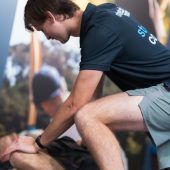
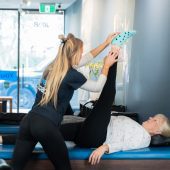
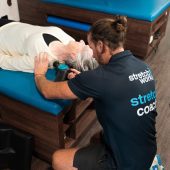
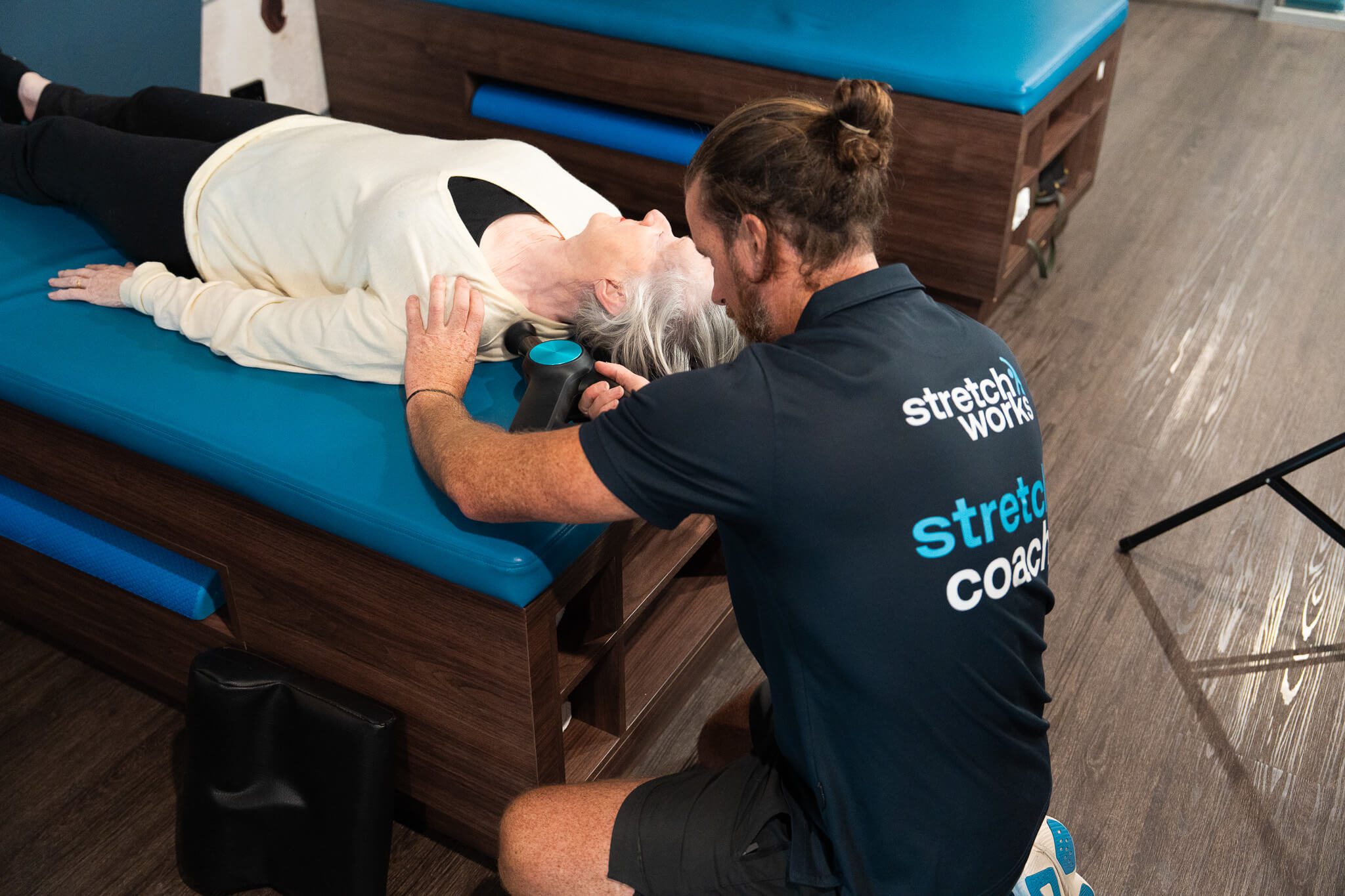
During professional assisted stretching, your Stretch Coach supports your body and guides you through targeted movements.
This can make it easier to relax, breathe and explore a range of motion without needing to hold your own body weight or work out the correct position by yourself.
5. Contract-relax stretching/PNF Stretching
Also known as PNF Stretching (Proprioceptive Neuromuscular Facilitation), it is a flexibility technique that combines passive stretching with isometric muscle contractions to provide the most effective stretches. It further involves a gentle muscular contraction, followed by relaxation, and then another stretch.
This technique is often used during guided stretching because it combines muscular effort, relaxation, and movement awareness.
It should be performed carefully, particularly if you are unfamiliar with the technique or have an existing injury.
Neck stretches Melbourne desk workers can try
Your neck works hard during the day.
It supports your head while you read, type, look at multiple screens and check your phone. When concentration increases, many people unintentionally lift their shoulders or move their head closer to the screen.
Gentle neck movements may help break up this position.
Gentle neck rotation
Sit or stand comfortably with your shoulders relaxed.
Slowly turn your head to look over one shoulder. Return to the centre and repeat on the other side.
Move only as far as feels comfortable. Do not force your head further with your hand.
Side neck stretch
Keep your face pointing forward.
Gently bring one ear towards the same-side shoulder without lifting the shoulder. You may feel a light stretch along the opposite side of your neck.
Return to the centre and change sides.
Chin nod
Keep your eyes facing forward and gently draw your chin backwards, as though you are making a small double chin.
Avoid dropping your head towards your chest.
This creates a small, controlled movement around the upper neck and can be useful after spending time leaning towards a screen.
Important neck-stretching reminder
Neck stretches should be slow and comfortable.
Stop if a movement causes dizziness, numbness, blurred vision, a strong headache, sharp pain or symptoms travelling into your arm.
Shoulder stretches Melbourne office workers may benefit from
Your arms remain in front of your body for most desk-based tasks.
This may leave the front of your shoulders and chest feeling restricted while the muscles around your upper back work to support the position.
The following movements can help add variety to your working day.
Shoulder rolls
Lift your shoulders gently towards your ears.
Roll them backwards and down in a slow circle. Repeat several times before changing direction.
Try not to rush the movement.
Doorway chest stretch
Stand in a doorway and place your forearm against the frame.
Step forward slowly until you feel a comfortable stretch through the front of your chest or shoulder.
Keep the movement gentle and avoid pushing into shoulder pain.
Cross-body shoulder stretch
Bring one arm across the front of your body.
Use the opposite arm to support it lightly towards your chest.
Keep the stretching shoulder relaxed rather than lifting it towards your ear.
Seated upper-back reach
Sit comfortably and reach both arms forward.
Allow your upper back to gently round as though you are reaching towards something in front of you.
Breathe into the space between your shoulder blades before returning to an upright position.
Knee stretches Melbourne desk workers should understand
When people search for knee stretches, they are often looking for a way to reduce the stiffness they feel when standing after sitting.
However, the knee does not work by itself.
Movement at the knee is influenced by the muscles around your hips, thighs and lower legs. That means a knee-focused mobility routine may include stretches for your quadriceps, hamstrings, hip flexors and calves.
Standing quadriceps stretch
Stand beside a stable chair or wall for support.
Bend one knee and bring your heel gently towards the back of your thigh. Hold your ankle only if it is comfortable to reach.
Keep your knees relatively close together and avoid pulling aggressively.
Seated hamstring stretch
Sit towards the front of a stable chair.
Extend one leg with your heel resting on the floor. Keep your back long and gently lean forward from your hips.
You may feel the stretch through the back of your thigh.
Wall calf stretch
Place both hands against a wall.
Step one foot backwards and keep its heel towards the floor. Bend the front knee slightly until you feel a gentle stretch through the back lower leg.
Hip flexor stretch
Move into a supported split stance with one foot in front of the other.
Gently shift your weight forward while keeping your upper body tall. You may feel a stretch through the front of the hip on the back-leg side.
This can be especially useful after spending much of the day with your hips in a seated position.
If your knee is swollen, unstable, recently injured or painful during normal walking, seek appropriate medical advice rather than trying to stretch through it.
Do not forget your hips and lower back
Neck and shoulder tension may be the most obvious effects of desk work, but the hips and lower back also spend hours within a limited range.
Your hips remain bent while your lower back supports your seated position.
Useful movements may include:
- Standing hip extensions
- Gentle seated trunk rotations
- Supported hip flexor stretches
- Seated figure-four stretches
- Short walks
- Controlled pelvic movements
- Moving between sitting and standing
You do not need an advanced mobility routine.
Regularly giving your body different movement options can be more useful than completing one long stretching session and then remaining still for the rest of the week.
A simple desk movement reset
This short sequence can be used to interrupt a long period of sitting.
Step 1: Stand and walk
Stand up and walk around your desk, office or home for a moment.
Let your arms move naturally rather than keeping them fixed by your sides.
Step 2: Move your neck gently
Turn your head slowly from side to side, then perform a few gentle chin nods.
Step 3: Roll your shoulders
Complete several slow shoulder rolls, focusing on allowing your shoulders to move backwards and down.
Step 4: Open your chest
Reach your arms slightly behind you or use a doorway to create a comfortable stretch through your chest.
Step 5: Move your hips and knees
Perform a few controlled sit-to-stands, gentle marching movements or supported hip flexor stretches.
Step 6: Move your ankles
Lift and lower your heels, circle your ankles or take a short walk.
The goal is not to perform a perfect routine.
It is to remind your body that the position you use for work is not the only position available to it.
Why does stiffness keep returning?
A stretch may feel good in the moment, but the stiffness can return once you sit down again.
That does not always mean the stretch failed.
Your daily routine may simply be giving your body more hours of sitting than minutes of movement.
A single stretch cannot permanently undo an entire working pattern.
Longer-term improvement usually requires a combination of:
- Regular movement breaks
- Consistent stretching
- General exercise
- Appropriate strength work
- Workstation adjustments
- Sleep and recovery
- Awareness of how you hold your body
- Support tailored to your individual movement
The aim is not to eliminate sitting completely. It is to prevent sitting from becoming the only thing your body does for most of the day.
When stretching alone is not enough
You can find thousands of stretching videos online.
The challenge is knowing which movement your body actually needs.
The area that feels tight is not always the only area involved. You may also unknowingly change the stretch by lifting a shoulder, rotating your hips, holding your breath or moving around the restricted area.
That is where guided assisted stretching can be valuable.
A Stretch Coach can:
- Support your body during the stretch
- Adjust the angle and position
- Help you relax rather than brace
- Notice differences between each side
- Change a movement when it does not feel right
- Focus on connected areas rather than one sore spot
- Help you understand what you are feeling
- Track how your movement changes over time
At StretchWorks, the goal is not to force your body into a position.
It is to work with your current range and help you explore movement safely and gradually.
What does it mean to listen to your body?
Listening to your body can sound vague, but it does not need to be.
Your nervous system constantly receives information about where your body is, how it is moving and how much tension or force is being used.
This internal movement awareness is known as proprioception.
During a guided stretch, your Stretch Coach observes how your body responds while also asking what you feel.
That may include noticing:
- When your body begins to brace
- Whether your breathing changes
- Where you first feel tension
- Whether one side moves differently
- Whether you feel stable or uncertain
- How the movement changes after relaxing
- Whether the sensation feels safe and manageable
StretchWorks is not literally listening to a sound or vibration coming from your muscles.
Instead, the Stretch Coach is paying attention to the feedback your movement provides and helping you understand that feedback too.
The aim is to help you become more aware of how movement happens in real time.
What if you have been cleared after an injury but still feel hesitant?
Being medically cleared to move does not always mean you immediately feel confident moving.
After an injury, you may have spent weeks or months protecting one side, avoiding certain positions or expecting a movement to hurt.
Those habits can remain even after your healthcare professional has confirmed that you can begin returning to normal activity.
You may notice that you:
- Brace before a movement
- Avoid using one side
- Move more slowly than necessary
- Hesitate in positions that once felt automatic
- Feel nervous about reaching your previous range
This does not mean you are weak or failing.
Your body may simply need time, reassurance and gradual exposure to movement.
Where appropriate and with clearance from your treating practitioner, slow and supported movement may help you rebuild confidence.
StretchWorks does not provide injury diagnosis or rehabilitation. Assisted stretching may sit alongside your broader health or movement plan when your doctor, physiotherapist or other treating professional considers it suitable.
Assisted stretching versus stretching alone
Stretching by yourself can work well when you know what you need and can reach the correct position comfortably.
Assisted stretching may offer additional value when:
- You struggle to relax during self-stretching
- You are unsure which areas need attention
- Your body compensates during a stretch
- One side moves differently from the other
- You find it difficult to remain consistent
- You want your movement assessed
- You want support reaching positions safely
- You would like to understand your body better
During an assisted stretching session, you remain involved.
You communicate what you feel, control the intensity and let your Stretch Coach know whenever a position needs to change.
It is a guided process, not something being forced onto your body.
Also Read: Stretch Therapy Melbourne Studio
Stretching should not feel like a punishment
Many people assume that an effective stretch needs to feel intense.
It does not.
Strong discomfort can cause you to tense, hold your breath or resist the movement. That works against the aim of helping your body relax.
A useful stretch should usually feel controlled and manageable.
You should still be able to breathe and communicate normally.
Do not force a stretch through:
- Sharp pain
- Numbness or tingling
- Dizziness
- Sudden weakness
- Joint instability
- Significant swelling
- Symptoms that are worsening
- A recent injury that has not been assessed
Speak with an appropriate healthcare professional when you are unsure whether stretching is suitable.
How often should office workers stretch?
There is no single schedule that suits everyone.
A person who exercises regularly and moves frequently throughout the day may need something different from someone who sits for long uninterrupted periods.
Instead of waiting until your body feels extremely stiff, consider adding small amounts of movement throughout the day.
For example:
- Move briefly between meetings
- Stand while taking selected phone calls
- Change position regularly
- Complete gentle dynamic movements before exercise
- Use comfortable static stretches after work
- Take a walk during lunch
- Schedule regular guided stretching when you need additional support
Consistency matters more than completing one perfect stretching routine.
Looking for neck, shoulder or knee stretches in Melbourne?
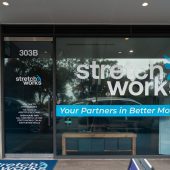
StretchWorks provides personalised assisted stretching and movement assessments from its studio in Black Rock, Bayside Melbourne.
Your introductory session includes a conversation about your movement, an assessment and a guided stretch designed around your body and goals.
Whether your neck feels restricted after screen time, your shoulders feel tight from working at a desk or your knees and hips feel stiff after sitting, the session gives you a clearer starting point.
The objective is not to push you as far as possible.
It is to help you move with more awareness, confidence and freedom.
Explore the StretchWorks introductory session or contact the team to discuss whether assisted stretching may suit your needs.
Frequently Asked Questions
What are the best neck stretches Melbourne office workers can do?
Gentle neck rotations, side bends and controlled chin nods may be useful for interrupting a fixed desk posture. Movements should remain slow and comfortable. Stop if you experience sharp pain, dizziness, numbness or symptoms travelling into your arm.
Which shoulder stretches are useful after sitting at a desk?
Shoulder rolls, doorway chest stretches, cross-body shoulder stretches and gentle upper-back reaches can add movement after prolonged computer work. The correct stretch depends on where you feel restricted and whether you have an existing shoulder condition.
What should knee stretches focus on?
Knee movement is influenced by the muscles surrounding the hips, thighs and lower legs. A knee-focused routine may therefore include quadriceps, hamstring, hip flexor and calf stretches rather than attempting to stretch the knee joint itself.
Can an ergonomic chair prevent stiffness?
A supportive chair can improve comfort and workstation positioning, but it cannot replace movement. Remaining in any one position for a long period may become uncomfortable, so regular changes of position and movement breaks remain important.
What is the difference between static and dynamic stretching?
Static stretching involves holding a comfortable position. Dynamic stretching involves moving through a controlled range. Dynamic movements are often used before activity or during desk breaks, while static stretches may be used after activity or when working on flexibility.
Is assisted stretching the same as physiotherapy?
No. Physiotherapy is a registered healthcare service that can assess, diagnose and treat injuries and health conditions. StretchWorks provides a general wellness service focused on assisted stretching, flexibility, mobility and movement awareness. It does not replace medical treatment or rehabilitation.
Can assisted stretching help after I have finished physiotherapy?
Assisted stretching may complement your ongoing wellness or movement routine after rehabilitation, but suitability depends on your circumstances. Discuss it with your treating healthcare professional if you have recently completed injury rehabilitation or continue to experience symptoms.
Where can I find assisted stretching in Melbourne?
StretchWorks provides assisted stretching and movement assessments at 303B Beach Road in Black Rock, supporting clients from Bayside Melbourne and surrounding areas.
Why does stiffness keep returning?
Our bodies will always go back to its neutral rest position unless clear influenced is made to say otherwise. And these return to base line can be either positively influenced or negatively depending on the mode taken to release that stiffness.